Tunisia Cruise Port Guide: What to See, Do, Eat, and Know Before You Go
Jun 03, 2026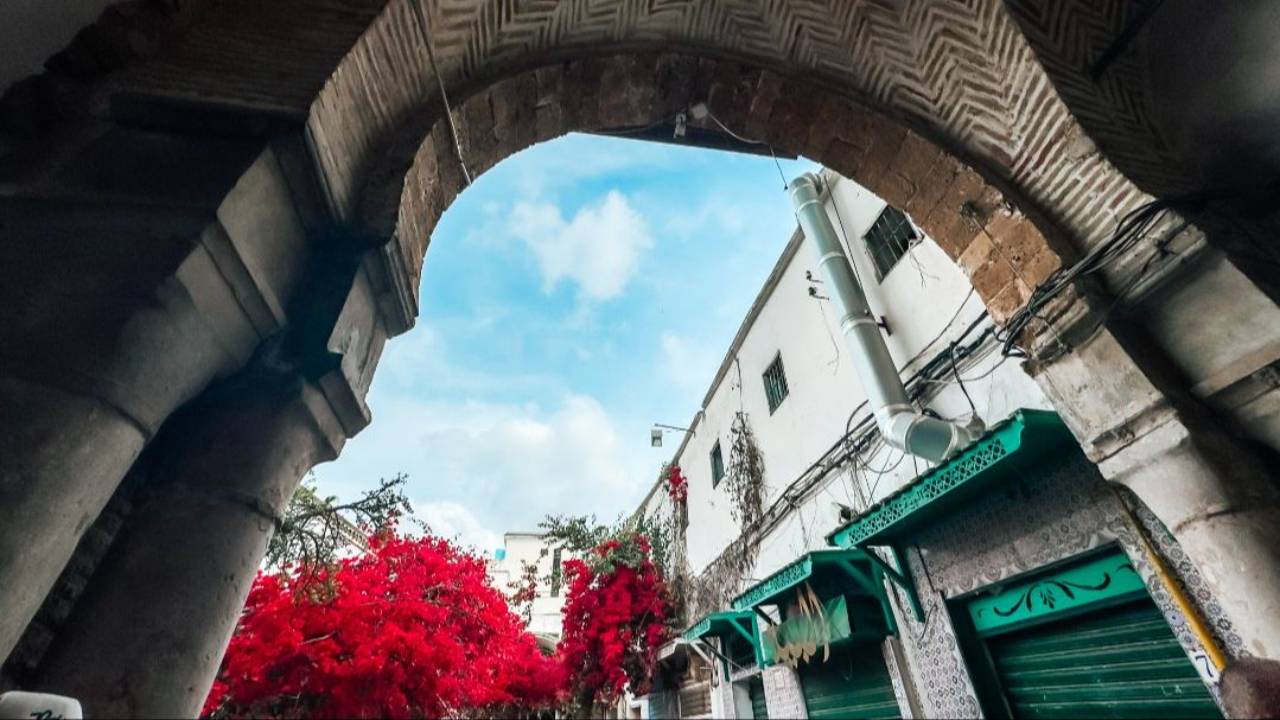
Overview of the Tunisia Cruise Port
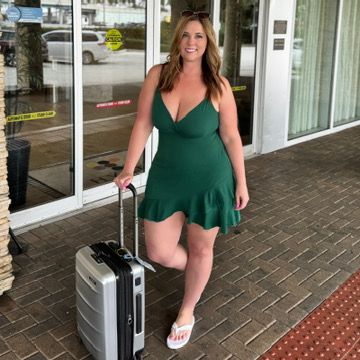
The Tunisia cruise port isn’t a standard stop on most Western Mediterranean itineraries, which is part of what makes it interesting. I visited on a Holland America Line cruise aboard the MS Oosterdam, and it marked something significant for me: my first time in Africa.
The ship docked at La Goulette Cruise Terminal, the official cruise port for Tunis. No tenders, no shuttles, and no long walk through a cargo yard. You step off the ship and you’re there.
The terminal itself is kind of neat. It's set up as a sort of mock village, with lots of room for vendor stalls where locals sell souvenirs, many of them mass-produced with some rare hand-crafted items here and there. It's a cute port terminal, but there's no rich or interesting history here, it's all manufactured. The real authentic charm of Tunis lies outside of the cruise terminal walls.
The showstoppers of Tunis are the historic Medina, the ruins of Carthage, and the blue-and-white village of Sidi Bou Said. All of those require transportation, and I’ll be honest here, Tunis isn’t the place I wanted to gamble with DIY logistics.
The city is layered and complex, with French, Arab, and Roman influences all coming together in a way that feels less curated and more raw. It’s not polished, and it’s not trying to be. But that’s part of why I found it so compelling.
We browsed a few stalls near the ship before heading out, but my real focus was getting into the heart of Tunis. That’s where this port gets interesting.
Table of Contents
- Overview of the Tunisia Cruise Port
- Tunisia Cruise Port Map
- Getting Around from the Tunisia Cruise Port
- Tunisia Cruise Port at a Glance
- Things to Do Near the Tunisia Cruise Port
- Modesty in Tunisia
- Top Sites Around the Tunis Cruise Port
- Is the Tunis Cruise Port Safe?
- Foods to Try in Tunisia
- Language and Currency in Tunisia
- The Symbolism Behind Tunisia's Iconic Doors
- Tunis Cruise Port Ship Schedule
- Tunisian Rugs and Berber Craftsmanship
- Climate and What to Wear in Tunis
- Time Zone in Tunis
- Tunisia Cruise Port FAQs
- Video: Tunisia Cruise Port Guide
- Making the Most of Your Tunis Cruise Port Visit

Tunisia Cruise Port Map
The Tunisia cruise port is actually the La Goulette Cruise Terminal, located just outside of Tunis, serving as the arrival point for most cruise ships visiting the area. The terminal is easy to navigate, with buses and taxis sitting directly outside for those heading into the city or beyond.
There is no walking path into downtown Tunis from the Tunisia Cruise Port. If you are planning to visit the Medina, Carthage, or Sidi Bou Said, expect a 20 to 30-minute drive depending on traffic. If you book a cruise line excursion (which I recommend here), your bus will pick you up right outside the Tunisia cruise port terminal.
Getting Around from the Tunisia Cruise Port
Published October 2025 | Updated June 2026
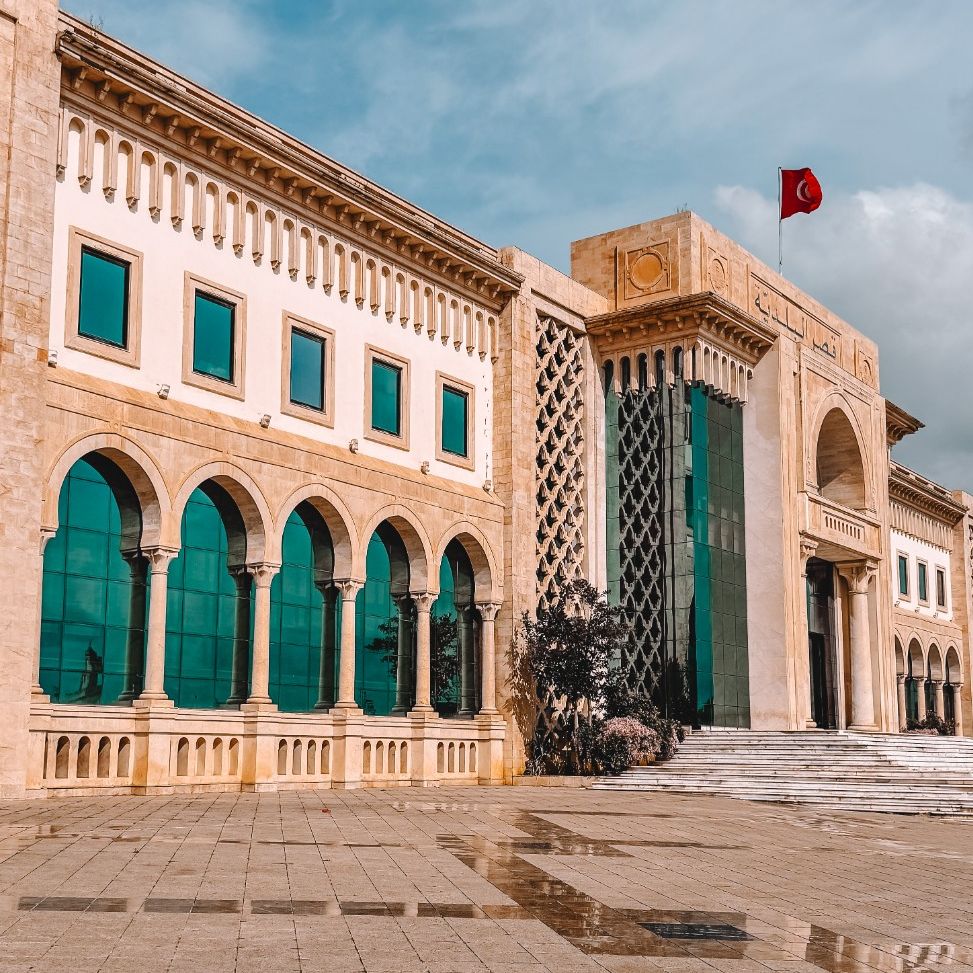
The Tunisia cruise port isn't a place where you can walk off the ship and dive into a charming city center. Instead, it serves as your jumping-off point for some of the most fascinating historical and cultural spots in the region. Here's how to get around from the port:
Tunisia Cruise Line Excursion
I usually avoid cruise excursions, especially in Europe where they tend to be expensive, but in Tunis I chose to book one. It was advertised as a transport-only experience into the Medina, which sounded perfect. I just wanted to wander on my own. In reality, it included a guide and was more structured than I expected. I had less personal freedom than I’d hoped, and that part was frustrating.
But I’m still glad I booked it. The Medina is about 30 minutes from the Tunisia cruise port, and Tunis isn’t a city where I wanted to gamble with figuring it out on my own and risk missing the ship. I did have some safety concerns (more on that in a moment). The bus picked us up right outside the Tunisia cruise port terminal and got us into the heart of the city efficiently, and that alone made it worth it.
Related: Pros and cons of independent vs. cruise line excursions
Taxi
Taxis are available outside the terminal and can take you to central Tunis, Sidi Bou Said, Carthage, or even La Marsa. Most taxis here do not use meters, so you need to agree clearly on a fare before getting in. Write it down or have them type it into your phone calculator, or record the verbal confirmation, to avoid misunderstandings. Have a translation app ready since English isn't widely spoken.
Related: Book a private driver to Explore Barcelona
TGM Light Rail
While a TGM station exists in La Goulette, it’s not easily accessible from the Tunisia cruise port on foot. Signage can be confusing, and it’s not designed with tourists in mind. It’s tempting to use it because it’s cheap, but I wouldn’t recommend this option unless you’re very comfortable with local transit in developing countries, speak at least a bit of Arabic or French, and can tolerate uncertainty.
Tunisia Cruise Port Language and Payment Tips
French is widely spoken, with Arabic as the official language, and English is hit or miss. Most vendors in tourist areas speak enough to get by, but drivers and café workers often don’t. Google Translate is your friend.
Vendors and drivers strongly prefer cash. Euros were accepted everywhere we went, even though the Tunisian Dinar is the official currency. I brought Euros ashore and didn’t need to exchange them for Dinars, which I’d recommend unless you’re staying longer. And as always, confirm taxi and tour prices clearly upfront to avoid being "upsold" later.

Tunisia Cruise Port at a Glance
- Max number of ships: Usually one cruise ship at a time. Traffic is light compared to major Mediterranean ports.
- Wi-Fi: Free Wi-Fi is available in the terminal, though connection speeds can be slow or spotty.
- Distance to town: Central Tunis is approximately 8 miles (13 kilometers) from the port, a roughly 25- to 30-minute drive, depending on traffic.
- ATMs: ATMs are available in the terminal and near the port entrance.
- Facilities: The Tunisia cruise port terminal has restrooms, several vendor stalls, and a small café. Most passengers head straight to excursions rather than lingering inside the terminal, as it primarily serves as a quick transit point before tours and transfers begin.

Things to Do Near the Tunisia Cruise Port
Most cruisers use Tunis as a gateway to bucket list sites like Carthage, the Medina, or Sidi Bou Said, and I don’t blame them. That’s exactly how I approached it. But if you’re staying closer to the ship or want to fill a little time before reboarding, there are a few things to explore in or near the cruise terminal itself.
Right outside the ship, the terminal area sometimes features a temporary cruise village. Think a small cluster of vendor stalls with souvenirs, local crafts, snacks, and drinks. We browsed through a few stands before our excursion and again when we returned, just to see what was on offer. You won’t need long here, but it’s convenient if you want to grab something small without heading into the city.
Most of what you’ll want to see in Tunisia requires a ride. Central Tunis, the Medina, and the Bardo Museum are all roughly 30 minutes from port. Sidi Bou Said and Carthage are a little closer, and in some cases more scenic.
On our visit, we returned to the port with some extra time after exploring the Medina, so we wandered through the shops near the terminal again and picked up a few small souvenirs.
I realized that the stuff sold at the terminal vendor stalls is exactly the same, for the most part, as what was sold in shops in the Medina, like plush and small metal enamel camels and mini genie lamps. So be sure to shop around and negotiate price, as most items are in abundance.
If you’re not doing an excursion or heading into Tunis, your time at the cruise port will be short. There’s no charming old town within walking distance and no waterfront promenade to explore.
That said, if you only have an hour or so and want to browse, sip a soda, and stretch your legs, the cruise village gives you something to do before heading back onboard. It's also good for photos, but keep in mind it's a recreated souk built for cruise passengers, not a real one.
Modesty in Tunisia Cruise Port
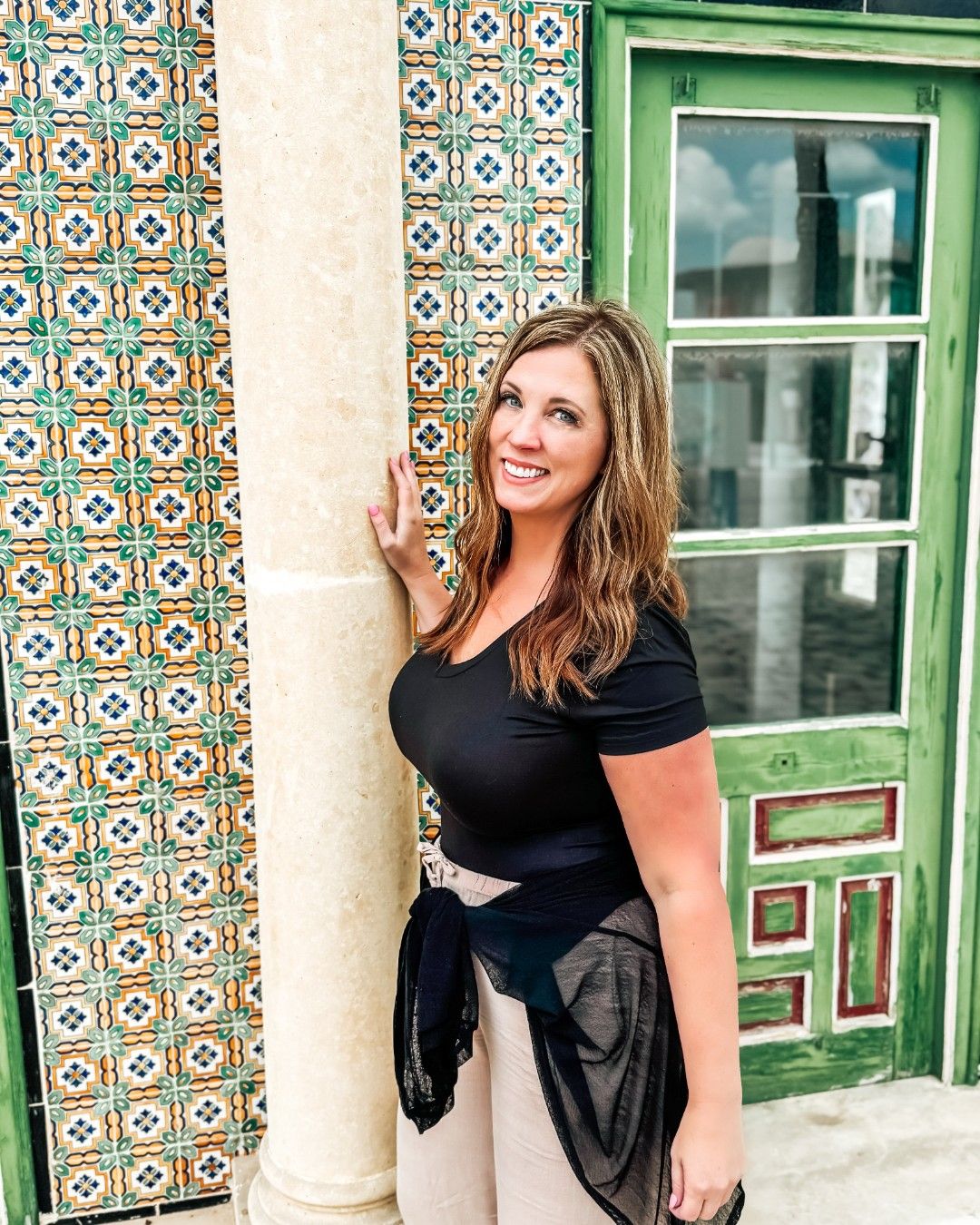
Before our stop at the Tunisia cruise port, I spent a decent amount of time thinking through what to wear. I wasn’t sure how conservative the dress expectations would be, especially since we planned to visit the Medina and other local areas outside the tourist bubble. I didn’t want to be that oblivious cruiser, or oblivious American, showing up in a tank top and shorts where that might not be appropriate.
I opted for long pants and made sure my shoulders were covered, and not because I was told I had to, but because it felt like the respectful thing to do. And I’m glad I did. I felt more comfortable walking through the Medina knowing I wasn’t being culturally insensitive.
That said, I definitely saw other passengers wearing typical cruise port outfits (shorts, sleeveless tops, even crop tops in a few cases), and no one seemed to bat an eye, so don't overthink it and of course wear what makes you most comfortable. But personally, I was more at ease blending in a little and showing awareness of local customs, especially in places where we were interacting with vendors or entering spaces that weren’t fully tourist-driven.
If you’re visiting a mosque or religious site, modest dress is expected, and women will likely need to cover their heads with a scarf. But even outside those settings, wearing something that leans conservative is a good call. Think loose-fitting clothes, covered knees and shoulders, and maybe a lightweight scarf or wrap in your day bag, just in case.
Top Sites Around the Tunisia Cruise Port
What makes Tunisia cruise port a standout cruise stop isn’t the port itself but what you can access from it. Within a 30 minute drive, you’ve got access to layers of history, Mediterranean charm, and some of the most unique sites on a Western Mediterranean itinerary. The four big sites here are the Medina, Sidi Bou Said, Carthage, and the Bardo Museum.
Many cruise excursions pair these stops together, giving you an overview of Tunisian culture, history, and scenery in a single day. You can also arrange a private taxi to hit one or two sites at your own pace, but this is a port where I recommend going with a cruise line excursion instead of venturing out on your own. Here are the top places cruisers typically visit from the port:
The Medina of Tunis
If you're only visiting one place in Tunis, make it the Medina. This UNESCO World Heritage site is the historic heart of the city, and it delivers the kind of immersive, slightly chaotic experience that sticks with you long after your trip.
The Medina isn’t a sanitized tourist zone. It’s a living, breathing part of the city where people work, worship, shop, and live, and it shows. Narrow alleys twist in every direction, packed with vendors selling spices, scarves, ceramics, leather goods, and sometimes, just random household items. The scent of jasmine might hit you on one corner, followed by grilled meat, perfume oil, or motorbike exhaust on the next. It’s loud, it’s gritty, and it’s real.
Our guide walked us through both the commercial souks, which are Arab markets, and the more residential areas of the Medina. He pointed out homes tucked behind heavy wooden doors, some decorated with symbolic carvings, like the Hand of Fatima, a protective emblem found throughout North Africa. I really enjoyed learning about the cultural sites in Tunis, especially since they were so different from the other stops during our Mediterranean cruise.
We also had one of those classic travel missteps here. A language mix-up at a local restaurant that led to us ordering a tuna omelet (no comment). Let's just say I didn't eat it. But it was memorable, and honestly, kind of funny in hindsight. Most vendors we encountered spoke enough English to navigate basic conversations, and several were surprisingly fluent.
If you’re planning to visit the Medina independently after docking at the Tunisia cruise port, be prepared to get lost, it’s truly maze-like and stay alert to your surroundings. The streets don’t follow a grid, and signage is limited. I’d still encourage you to explore, just go in prepared and maybe with a downloaded offline map.

Sidi Bou Said
Sidi Bou Said is a cliffside village about 20 kilometers from the Tunisia cruise port, and it’s one of the most visually striking places I’ve visited on any cruise itinerary. The whole village is painted in white and cobalt blue: whitewashed walls, arched doorways, and wooden shutters and balcony railings all in that same vivid shade of blue. It looks almost too photogenic to be real, but it is.
The village sits high above the Bay of Tunis, so the views are sweeping. On a clear day you can see out across the water for miles. The main street runs uphill through a row of cafés, art galleries, and small shops selling ceramics, textiles, and handmade goods. It’s touristy, but in a pleasant way, not an overwhelming one.
I’d strongly recommend Sidi Bou Said if you’re deciding between sites. It pairs well with a Medina visit since they’re close to each other, and many cruise excursions combine both. If you only have time for one, the Medina is the more immersive experience, but Sidi Bou Said is the more photogenic one.

Carthage
Carthage is the ancient city that once rivaled Rome, and its ruins are spread across a surprisingly large area along the coast just north of Tunis. This was, for me, one of the most historically significant stops of the entire Mediterranean cruise. Standing on the same ground where the Punic civilization built one of the ancient world’s most powerful empires is genuinely moving, even if what remains is fragmented and requires some imagination to piece together.
The main sites include the Antonine Baths, the Punic ports, the Tophet (a Phoenician sacred area), and the Carthage Museum on Byrsa Hill. Most cruise excursions hit the highlights on a loop, which is a reasonable way to cover the ground efficiently. But if you’re a history enthusiast, you could spend a full day here and still want more.
Keep in mind that Carthage doesn’t have the dramatic preserved ruins of somewhere like Rome or Athens. Much of what you see is foundation-level archaeology and reconstructed columns. That can feel underwhelming if you arrive expecting a Colosseum moment. But if you’re there for the history itself, Carthage is extraordinary.

The Bardo Museum
The Bardo Museum is one of the most underrated museums in the entire Mediterranean. Housed in a 19th-century Husainid palace, it holds one of the largest and most impressive collections of Roman mosaics in the world. These aren’t small decorative pieces. Some of them are enormous, floor-to-ceiling works of art, remarkably well preserved and displayed across the museum’s grand, tiled rooms.
I wasn’t expecting the Bardo to be as impressive as it was. It’s not as well known internationally as it deserves to be. If you have any interest in Roman history, art, or archaeology, this museum alone is worth the stop in Tunis.
It’s located about 6 kilometers west of central Tunis, so it’s easy to combine with a Medina visit. Many cruise excursions include it as a stop, and it’s also reachable by taxi. Budget at least 90 minutes, and more if you like to linger.
Is the Tunis Cruise Port Safe?
This is the question I get asked most about this port, and it’s worth addressing directly.
Tunisia has experienced political instability and terrorism in the past, including serious incidents in 2015 that targeted tourists. The security situation has improved significantly since then, and Tunis sees regular cruise traffic, but it’s not a destination where I’d say safety is a complete non-issue.
During my visit, I felt safe throughout the day. The cruise excursion kept us on a clear itinerary, and being in a group helped. The Medina was busy and slightly overwhelming in places, but I never felt in physical danger. The bigger practical concerns were pickpocketing in crowded areas (keep a hand on your bag in the souks) and the aggressive vendor attention that you get in many North African markets.
My honest take: Tunis is safe enough for most cruisers who take normal precautions. I wouldn’t let fear keep you off this ship. But I also wouldn’t recommend wandering alone into unfamiliar areas, and I’d strongly suggest booking a cruise line excursion here rather than going completely DIY, especially on a first visit. Check your government’s current travel advisory before your sailing.
The U.S. State Department currently lists Tunisia as a Level 2: Exercise Increased Caution destination, meaning travelers should be aware of heightened risks, particularly related to terrorism. This rating is consistent with countries like France and Belgium. It doesn’t mean avoid, it means go in informed.
Foods to Try in Tunisia
Tunisian food deserves its own guide. It’s bold, spiced, and distinct from the broader category of Mediterranean cuisine. Harissa, the North African chili paste, appears in almost everything and can range from mild to genuinely fiery. Here are the things I’d prioritize trying if you have the opportunity:
- Brik: A thin pastry stuffed with tuna, egg, capers, and sometimes cheese, then fried. It’s a Tunisian staple and one of the most distinctive things you can eat here.
- Lablabi: A hearty chickpea soup served with bread, olive oil, harissa, and toppings like capers or a poached egg. It’s inexpensive and incredibly satisfying.
- Couscous: The national dish of Tunisia. Unlike lighter North African versions, Tunisian couscous tends to be heavily spiced with a rich tomato-based sauce and merguez sausage or lamb.
- Makroudh: A semolina pastry filled with dates and drizzled with honey, usually sold at bakeries and sweet stalls. A good souvenir if it survives the trip back.
- Mint tea: Strong, sweet, and served in small glasses with pine nuts floating on top. This is the social drink of Tunisia, and you’ll see it everywhere.
The tuna omelet from my own visit is not on this list.
Language and Currency in Tunisia
Language: Arabic is the official language, but French is widely spoken, particularly in cities and tourist areas. English is less common, though vendors in the Medina and tourist sites often speak enough to get by. A basic French phrase or two goes a long way, and a translation app is worth having ready.
Currency: The official currency is the Tunisian Dinar (TND). However, Euros were accepted widely during our visit, including at vendor stalls, cafés, and for taxi fares. I did not exchange money and had no issues. If you plan to visit local markets off the tourist path, having some Dinars could be useful, but for most cruise day visitors, Euros will work fine.
As with any market destination, clarify prices before you commit. Numbers can shift quickly if there’s a language gap, and some vendors will present a different price at checkout than what was agreed. This isn’t unique to Tunisia, but it’s worth staying aware.

The Symbolism Behind Tunisia's Iconic Doors
One of the most visually memorable things about Tunis, and especially Sidi Bou Said, is the doors. They’re everywhere: arched, ornate, studded with iron nails, and almost always painted in shades of blue. These aren’t decorative in a casual way. They carry real cultural meaning.
The blue color traditionally represents protection and is believed to ward off the evil eye, a concept deeply embedded in North African and Middle Eastern cultures. Many doors also feature the Hand of Fatima (known locally as the Khamsa), a palm-shaped symbol that similarly serves as a protective emblem. You’ll see it carved into wood, cast in metal, and sold as jewelry and souvenirs throughout the Medina.
The knockers on Tunisian doors are also meaningful. A large ring signals that a male visitor is present; a small clapper signals a female. This allowed the household to know who was at the door before opening it, an important distinction in traditionally gender-segregated homes. Most doors in tourist areas have been modernized, but you’ll still see the traditional knocker pairing on older structures in the Medina.
Even if you’re not particularly interested in cultural symbolism, the doors are simply worth photographing. They make for some of the most striking images from any Mediterranean cruise stop.
Tunis Cruise Port Ship Schedule
Tunisia isn’t on every Mediterranean cruise itinerary. It appears more commonly on longer sailings and transatlantic repositioning routes, and it tends to be more popular with European cruise lines than American ones. Holland America, MSC, Costa, and several luxury lines include it with some regularity.
If you’re curious whether your sailing calls at Tunis, the La Goulette port authority publishes a live cruise schedule that shows upcoming ship visits by date. It’s useful both for confirming your own itinerary and for checking how busy the port will be on your arrival day.

Tunisian Rugs and Berber Craftsmanship
If you’re at all interested in textiles or handmade goods, the rug vendors in Tunisia are worth your time, even if you don’t plan to buy. Tunisian rugs, particularly those made in the Berber tradition, are some of the most beautifully crafted pieces I’ve encountered anywhere in the Mediterranean.
You’ll see two main types: mergoum rugs, which feature geometric patterns in earthy reds, oranges, and browns, and kilim-style flat-weaves, which tend to be lighter and more portable. The mergoum rugs in particular are distinctive to North Africa and are a legitimate art form, not tourist kitsch.
In the Medina, rug dealers will often invite you in for tea and a presentation. This is a traditional sales approach and not inherently manipulative, but it does create social pressure. You’re under no obligation to buy, and a polite refusal is always acceptable. If you’re genuinely interested, negotiate. Starting at about half the asking price is standard. Most dealers expect it.
Shipping a large rug home is possible but complicated. If you fall in love with something, ask the vendor about shipping options before you commit, and make sure you know what you’re agreeing to.
Climate and What to Wear in Tunis
Tunis has a Mediterranean climate, which means hot, dry summers and mild, wetter winters. Most cruise visits happen between April and October, when temperatures range from comfortable in spring to genuinely hot in July and August.
For summer visits, lightweight, breathable fabrics are essential. Linen, cotton, and moisture-wicking materials will keep you from overheating in the Medina, where the narrow alleys trap heat and airflow is limited. Comfortable walking shoes are non-negotiable. The Medina streets are uneven, cobbled in places, and you will walk more than you expect.
As noted in the modesty section above, covering your shoulders and knees is a good call regardless of the weather. A lightweight scarf or wrap takes up almost no space and gives you flexibility if you want to enter a mosque or religious site.
Time Zone in Tunis
Tunisia observes Central European Time (CET), which is UTC+1. Tunisia does not observe daylight saving time, which means during European summer months it runs one hour behind most of the countries on the same Mediterranean cruise itinerary. If you’re sailing from a port in Italy, France, or Spain, your ship will likely adjust clocks for the Tunisia stop. Check with your cruise line or the ship’s daily program to confirm the local time and, crucially, your all-aboard time.
Related Mediterranean cruise ports: Livorno, Valencia, Salerno
Tunisia Cruise Port FAQs
Is Tunisia safe for cruise passengers?
Tunisia is generally safe for cruise passengers who take normal precautions. The U.S. State Department rates it Level 2 (Exercise Increased Caution), primarily due to terrorism risk. Most visits go smoothly, but I recommend booking a cruise line excursion rather than going fully independent, especially on a first visit.
Can I walk from the cruise port to the Medina?
No. The Medina is approximately 30 minutes by car from La Goulette. There is no safe or practical walking route. You will need a taxi, a cruise line excursion, or some form of prearranged transport.
What currency should I bring to Tunisia?
Euros are widely accepted in tourist areas, vendor stalls, and for taxis. The official currency is the Tunisian Dinar, but most cruise visitors will not need to exchange money for a one-day visit.
Should I book a cruise line excursion in Tunisia?
Yes, more so than at most Mediterranean ports. Tunis is logistically complex for independent travelers, English is not widely spoken, and having a guide and guaranteed transportation back to the ship is genuinely valuable here. I usually skip cruise excursions, but Tunisia is an exception.
What should I wear at the Tunisia cruise port?
Cover your knees and shoulders as a baseline. Bring a scarf if you plan to visit religious sites. Lightweight, breathable fabrics are ideal in warmer months. Comfortable walking shoes are essential for the Medina.
Do I tip in Tunisia?
Tipping is appreciated but not as formalized as in the U.S. For restaurants, rounding up the bill or leaving 10% is standard. For guides and drivers, a few euros per person is appropriate. Confirm taxi fares in advance so there is no ambiguity about what you owe at the end of the ride.
Video: Tunisia Cruise Port Guide
Making the Most of Your Tunis Cruise Port Visit
Tunisia isn’t a port that hands you a polished tourist experience on a platter. It’s layered, complex, and occasionally disorienting in the best possible way. The Medina alone is worth the stop, and when you add Carthage, Sidi Bou Said, and the Bardo Museum into the mix, you have one of the richest day-visit options on the entire Mediterranean circuit.
My approach: book the cruise excursion, use it to get in and out of the Medina safely and efficiently, and then give yourself time to wander. Stay alert, dress respectfully, negotiate prices, and say yes to the mint tea.
And if you end up ordering a tuna omelet by accident, just embrace it. That’s travel.
For more cruise port guides, visit my complete port guide library.
BABY, LET'S CRUISE...
Let us help you plan the cruise (or trip) of a lifetime!
Subscribe to my Cruiseletter
Get juicy cruise info, insider tips, and FREE port guides, delivered straight to your inbox. Plus, you'll get my FREE Cruise Packing List & Planner, and I promise to never spam you.
By submitting this form, you're agreeing to receive emails from Professor Melissa. Don't worry, your info is safe with me. We'll never share or sell it. You can also unsubscribe at any time.